


The ETF industry doesn't reward good ideas. It rewards good ideas, well-timed and well-told. In this issue, we examine what the rise of DRAM reveals about the state of thematic investing and the communications strategies that actually move the needle in today's more discerning market.
We also go inside the communications strategy behind ProcureAM's Artemis II moment, a masterclass in advance preparation and media coordination, and pull back the curtain on one of the most powerful platforms in ETF media: CNBC ETF Edge.
Subscribe today so you don’t miss what’s next!
What DRAM Teaches Us About Thematic ETFs and How to Market Them
By: Caitlyn Kardish, Executive Vice President
Thematic ETFs were supposed to be dead. After the post-2021 hangover consisting of bloated fund rosters, performance disappointment, retail investors burned by hype, the conventional wisdom was that the thematic moment had passed. Broad, buzzy themes were not converting. Flows dried up. The category quietly contracted.
Then came DRAM.
The actively managed DRAM ETF, focused on data center REITs and the infrastructure powering the AI buildout, became one of the more closely watched product launches in recent memory. The flows followed. So did the attention. And with them, a question worth asking: what does this tell us about where thematic investing (and thematic marketing) goes from here?
Product-Market Fit Is a Real Thing in ETFs
The DRAM story starts with a thesis that arrived at exactly the right moment. Data centers are physical infrastructure, and the demand driving them is measurable, growing, and tied to one of the most durable trends in the market. The product did not have to manufacture relevance. It had it.
That is the first lesson: specificity wins. The thematic ETFs that struggled were not wrong about the future. Many were just too broad to give investors a clear reason to own them. A fund that captures everything captures nothing. A tight focus gives investors a precise expression of a conviction they already held. That precision is what product-market fit looks like in an ETF wrapper.
The broader signal here is that thematic is not dead. It matured. The bar is simply higher now. Investors, advisors, and allocators have been through a cycle. They are more skeptical of themes dressed up as strategy. What cuts through is a product that can answer a direct question: why this, why now, why this structure?
The Ticker Is Part of the Brand
One underappreciated element of DRAM's success is the ticker itself. In a market where thousands of products compete for finite attention, a memorable, on-theme ticker is a communications asset. It travels. It shows up in headlines, in social posts, in conversation. It does work that a six-word fund name cannot.
For asset managers, this is worth internalizing early in the product development process. The ticker is often the first thing a retail investor sees. It signals what the fund does before anyone reads the prospectus.
Retail Investors Respond to Narrative
The communications lesson at the center of the DRAM moment is straightforward: retail investors do not buy products, they buy stories. The underlying theme — the physical infrastructure behind AI, the data center boom, the real estate angle most investors had not considered — was inherently compelling. The marketing job was to tell that story clearly, consistently, and in the places where retail investors actually spend their time.
That means financial content creators, social platforms, and earned media that speaks in plain language. It means leading with the why now before the fund mechanics. It means treating the investment thesis as a communications brief, not a compliance document.
The managers who saw success here did not wait for traditional press coverage to move the needle. They went direct and the distribution reflected it.
Speed Is a Competitive Advantage
Thematic windows open and close. The data center infrastructure story has legs, but the window for being first and loudest on a theme is short. Communications strategy has to move at the pace of the market, not the pace of a content calendar.
For asset managers with thematic ambitions, the operational lesson is clear: launch readiness and communications readiness have to be built in parallel. A great product that arrives late to its own narrative is still a missed opportunity.
The lesson from DRAM is not to launch more thematic ETFs. It is to earn the attention you are asking for. That means starting with a thesis specific enough to matter, building a product that delivers on it precisely, and constructing a communications plan that meets retail investors on their terms with clarity, speed, and a story worth telling.
Thematics are back. But the firms that will benefit most are the ones that treat distribution and storytelling as seriously as they treat portfolio construction.

Behind the Program: CNBC’s ETF Edge Explained
By: Kathleen Elicker, Associate Vice President
For several issues, we've featured Q&As with journalists and industry insiders to help ETF issuers better understand today's media landscape. While those conversations will continue,
in this new feature, we'll spotlight influential ETF-focused programs and publications, offering a behind-the-scenes look at how they operate, what topics drive engagement, and what ETF issuers should know before pursuing an opportunity. First up: CNBC's ETF Edge.
Hosted by Dominic Chu, ETF Edge is one of the few national programs dedicated exclusively to the ETF industry. The show airs online on Mondays and serves as a forum for discussing the trends, products, and market developments shaping the ETF landscape. Segments are often amplified through CNBC's broader ecosystem, including video clips, CNBC.com articles, social media, podcasts, and references across other CNBC programming. For issuers, this means the value of an appearance extends well beyond a single interview, creating multiple touchpoints with advisors, investors, and industry professionals.
ETF Edge attracts a highly targeted audience that includes financial advisors, institutional investors, wealth managers, ETF issuers, and engaged retail investors. Unlike broader market programs, viewers tune in specifically to understand how ETFs are being used to address current market challenges, access new investment themes, and build portfolios.
What Topics Get Attention?
The strongest ETF Edge segments typically center on broader industry trends rather than individual products. Producers are often looking for timely discussions around market volatility, portfolio construction, active ETF adoption, product innovation, digital assets, and evolving investor behavior. The key is to connect your expertise to a larger story. Rather than leading with a fund launch, consider how your product or perspective fits into a trend that investors are already talking about.
What Makes a Strong Guest?
The most successful and repeatable guests are educators first and marketers second. ETF Edge favors experts who can explain complex topics in a clear, conversational manner and offer a differentiated point of view on the market.
Guests who can translate technical ETF concepts into digestible takeaways for investors are often the most compelling. Strong data, a clear thesis, and the ability to speak beyond a firm's own products can go a long way toward making an appearance memorable.
For ETF issuers interested in appearing on ETF Edge, the best place to start is to become a regular viewer. Pay attention to the themes being discussed, the types of guests invited to participate, and how successful speakers connect their expertise to broader market conversations. Understanding the show's format, audience, and focus can help issuers develop stronger story ideas, and position their spokespeople more effectively to contribute meaningful insights to the discussion.
Storytelling Success: Eyes on the Stars: How ProcureAM Became Part of the Story
By: Abbie Sternberg, Assistant Account Executive
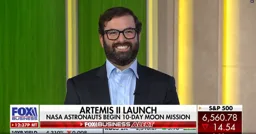
The Artemis II mission represented not just a space story but an investment story, Gregory ensured that Andrew Chanin, CEO of ProcureAM, was the voice financial media turned to when NASA sent astronauts around the Moon for the first time in more than 50 years. The team had been tracking the mission for months and had prepared to act the moment the story broke.
Standout moments: Chanin used each appearance to bring the commercial space economy into focus for a wide range of investors. On CNBC, he made the case plainly: "This is a time to focus attention on the space economy." Reuters quoted him in a widely syndicated analysis on how commercial players like SpaceX and Blue Origin were reshaping NASA's Artemis program. Bloomberg reported that the UFO ETF pulled in nearly $175 million in Q1, its largest quarterly inflow since inception, while InvestmentNews told advisors the launch was putting space ETFs in the spotlight. Those placements, among hits on Fox Business Network, Schwab Network, Reuters TV, and Barron's Advisor, added up to one of the most concentrated media moments ProcureAM has had.
Why it worked: Gregory began tracking Artemis months before launch, giving the team time to prepare and reach out to contacts. When the story hit simultaneously across broadcast and print, Gregory was able to jump on the news cycle to get Andrew in front of reporters. That advance work turned what could have been a reactive press into a coordinated push that put ProcureAM's name and message in front of investors at the right time, on the right platforms.