


SuperReturn Europe returned to Amsterdam this year amid active debate about the continent’s place in global private markets. For much of 2025, investors have talked about a potential rotation to Europe drawn by lower entry multiples, a more stable regulatory and political landscape and a U.S. that’s considered fully priced. Whether that much-discussed shift ultimately materializes remains uncertain, but conversations at the conference made one thing clear: European GPs see a real opportunity and are working hard to capture it.
Across panels and hallway conversations, the conference revealed a story of two Europes: the “haves,” where strategy, specialization and innovation are creating momentum, and the “have-nots,” where managers still struggle to differentiate and attract global capital in a market dominated by U.S. scale.
This makes manager selection especially critical. A Cambridge Associates presentation showed that while long-term European private equity performance broadly matches the U.S., return dispersion is far wider. The top 5% of European funds returned 41% compared to 38% in the U.S., while the bottom 5% returned -7.2% versus -3.2% in the U.S. In Europe, picking the right team matters more.
Amid high rates, uneven growth and geopolitical uncertainty, European GPs are focused on a practical question: what can Europe offer that investors want, and how should that story be told?
The Lower Mid-Market: Europe’s Homegrown Advantage
If Europe has a natural strength, the lower mid-market is it. This segment, which is typically defined as companies with between €10 million and €300 million in revenues, reflects Europe’s economic fabric: founder-owned, regionally rooted businesses with deep technical expertise and strong positions in narrow niches.
Panelists noted that this part of the market continues to perform well despite broader volatility. Deal flow has been steadier, competition more measured and value creation grounded in hands-on improvement rather than financial engineering. There are more exit paths available than at the large-cap buyout end of the market. For many LPs, this is a segment that has historically delivered stronger returns relative to large-cap buyouts.
Innovation is also emerging in practical ways. AI is being introduced not as a sweeping transformation but as a tool to modernize routing, maintenance, procurement and other operational layers within traditional companies. Many of these smaller firms are not experimenting with AI independently, but once shown clear use cases, they adopt it quickly.
The lower mid-market highlights how Europe competes best: through specialization, industrial depth and a form of company building that suits the region’s business culture.
Emerging Managers: A More Open Market Than Expected
For emerging managers, fundraising clearly remains challenging, yet there’s something of a shift in mindset with several LPs saying they are more open to backing newer teams, particularly those with sharply defined strategies or operating backgrounds that bring something different to the market.
Europe is seeing more spinouts from mid-market firms as professionals look for clearer economics and greater autonomy. At the same time, the independent sponsor universe has become a proving ground for future fund managers, allowing teams to demonstrate sourcing ability, execution discipline and repeatable value creation before raising institutional capital.
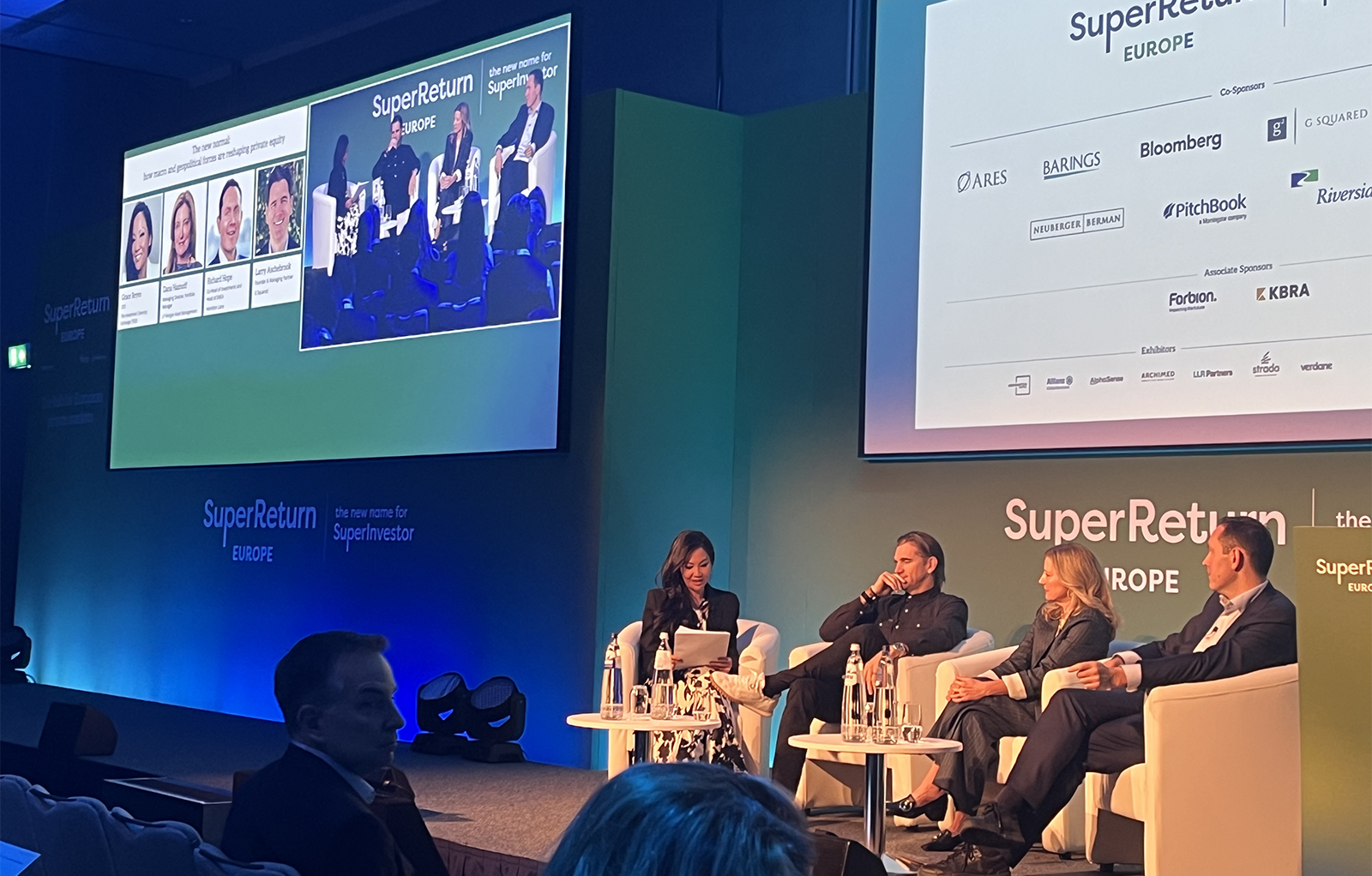
Two LPs emphasized that success increasingly depends on how well a manager presents their approach. With capital scarce, managers are spending more time refining their positioning: what they do, why it matters and how it fits today’s European landscape. Those who communicate a clear thesis and show disciplined execution are gaining traction.
Independent Sponsors: A Model Taking Root in Europe
Independent sponsors—long associated with the U.S. market—are becoming a meaningful part of the European ecosystem. What began as a route toward raising a first-time fund has evolved into a deliberate long-term model for many experienced investors.
More than one panelist reflected on a notable increase in both the volume and quality of independent sponsors operating across the continent. It’s a model that fits well with Europe’s relationship-driven sourcing environment, where founders often prefer buyers who invest time in understanding the business and the community around it. One panelist shared the example of a German owner who accepted a lower offer because he trusted the sponsor who had spent significant time on the ground.
The approach also appeals to investors looking for greater flexibility: smaller teams, targeted deal selection and the ability to move at their own pace. It isn’t, however, without its challenges, including the absence of committed capital and the need to secure stable funding partners.
A Continent Thinking Deliberately About Its Next Move
From a communications and branding perspective, one theme stood out: firms are thinking harder about how they compete and how they articulate their strengths. Many believe investor interest in Europe is genuine, even if inflows remain uncertain. The level of intentionality was striking. GPs are leaning into Europe’s structural advantages: the lower mid-market; specialized emerging managers; relationship-driven independent sponsors, and are experimenting with different approaches to sourcing, strategy and positioning.
The opportunity is there. The question now is how firms choose to pursue it and how convincingly they tell that story to investors who are paying closer attention to Europe’s private fund managers.