

Election season puts ETF issuers in a real bind. Stay quiet on the news cycle dominating every headline, or risk being pulled into a political fight that has nothing to do with your fund. In this issue, Caitlyn Kardish and Mark Grandstaff share a practical framework for staying anchored to portfolio impact instead of political opinion.
We also sit down with Ryan Nauman, host of Views from 6,230, for a wide-ranging conversation on his path into the industry, the shifting active-passive debate, and where he sees the next wave of opportunity. And we revisit a summer that proved slower news cycles don't have to mean quieter coverage, breaking down what worked for ETF issuers who kept their media momentum going through August.
Subscribe today so you don’t miss what’s next!
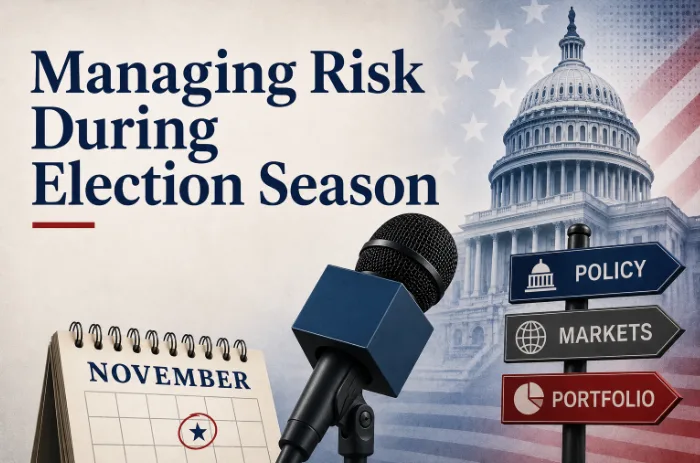
Managing Risk During Election Season
Mark Grandstaff, Director of Content Strategy, Financial Services and Caitlyn Kardish, Executive Vice President
A reporter or a broadcast producer looks for a reaction to a tariff announcement or a policy proposal that touches your fund’s sector. Should your media-trained SME take the opportunity?
Your first instinct is probably to turn down the opportunity. Unless a fund has an inherent political weight by design, it’s likely that you don’t want to touch politically-charged media opportunities with a 10-foot pole. You don’t want to alienate potential investors, or worse, get caught up in the latest battleground of the political culture war that might overshadow any good-faith discussion of your product or field of expertise.
But what if politics is all the media is interested in?
I spoke to my colleague Caitlyn Kardish, an executive vice president at Gregory who has spent years advising ETF issuers. Both of us have seen how U.S. election cycles tend to play out, and they can be rough for issuers with strong expectations of media coverage that also want to stay above the fray.
Many reporters turn their focus exclusively to political topics around this time frame. Or, a more neutral broadcast segment might get bumped because a high-profile political candidate has dropped a bombshell announcement that outlets have to scramble to cover.
It’s a frustrating state of play, but staying quiet carries an opportunity cost.
"Advisors and allocators notice when a firm goes quiet on the thing dominating every headline, and silence reads as either not paying attention or not having anything useful to say," Caitlyn said. "The goal is staying anchored to what an event means for portfolio positioning, not what it means politically."
If an opportunity arises about a new announcement in the U.S./Canada trade war, for example, it’s possible to talk about it all day without taking a side. You don’t have to say whether you feel the trade war is good or aligns with your politics, but you can absolutely keep the conversation fixed on what the policy might do to supply chains, sector rotation, or some other second- or third-order consequence that intersects with your domain of expertise.
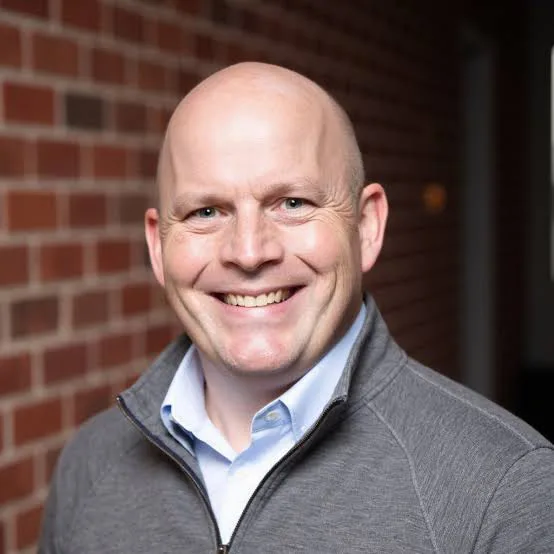
Q&A with Ryan Nauman, Host of Views from 6,230
By: Chase Kosinski, Account Supervisor
Ryan Nauman is an investment industry veteran with more than 20 years of experience across wealth management, fintech, investment research and portfolio analytics. He is the host of Views from 6,230, where he speaks with leading investment professionals on topics including ETFs, portfolio construction, alternatives, AI and the evolution of wealth management. Ryan previously spent years at Zephyr and now focuses on expanding his independent podcast, newsletter and market-intelligence platform for investment professionals.
You’ve spent more than 20 years working across wealth management, fintech, investment research, and portfolio analytics. Can you walk us through your career journey and what ultimately led you to create Adjusted for Risk? When you launched the podcast, what gap did you see in the market, and what did you hope to provide investment professionals that wasn’t already available?
My path into the investment industry was anything but traditional. I grew up in a very small town in Wisconsin, made some questionable decisions in college—as some of my podcast guests like to say, just because you can doesn’t mean you should—and changed my major more times than I care to admit.
That meant I had a lot of catching up to do.
Early in my career, there were plenty of missteps, including a period when I was sleeping on the floor of a pretty questionable apartment in Seattle. But I knew I wanted to work in this industry. I spent countless hours in libraries reading everything I could get my hands on and sought out mentors who were willing to teach me. I made a commitment to myself that if I was going to succeed, I needed to learn at least one new thing every day.
More than 20 years later, that philosophy still drives me.
It's also a big reason I created Adjusted for Risk (now Views from 6,230). Wealth and asset management is an incredibly broad industry, and it continues to evolve faster than ever. There is always another strategy, technology, investment vehicle or perspective worth understanding.
There are already a lot of great investment podcasts, so I never wanted to create another show where people simply talked about where the S&P 500 might finish the year. I wanted to explore topics and ideas that might not always make the mainstream financial media—ETFs, SMAs, portfolio construction, behavioral finance, technology, alternatives, AI and the evolution of wealth management—and do it in a way that is independent, conversational and useful.
The goal is pretty simple: I want someone to finish an episode having learned something they can use, whether that's making a better investment decision, asking a better due-diligence question, or finding a better way to serve their clients.
And selfishly, the podcast gives me an excuse to keep learning too.
Hosting Views from 6,230 and speaking with portfolio managers, CIOs, economists, and industry leaders, what are some of the biggest lessons you’ve taken away from those conversations? Have any perspectives or ideas significantly changed the way you think about markets, investing, or portfolio construction?
I've been incredibly fortunate to speak with some of the brightest minds in investment management. One thing I've learned that doesn't necessarily have anything to do with investing is that these people are, first and foremost, people.
You see someone regularly on Bloomberg or CNBC, read their research, or follow their career and it's easy to build them up in your mind. Then you sit down and have a conversation and discover how gracious, curious and approachable many of them are. That's been one of the unexpected benefits of doing the podcast.
From an investment standpoint, the biggest lesson has been don't dismiss an investment thesis simply because it doesn't fit your existing worldview.
There are a lot of strategies and ideas that can initially sound crazy. It's easy to dismiss them before doing the work necessary to understand the thesis. I've learned that intellectual curiosity, and a willingness to change your mind, is incredibly important in investing.
Crypto is probably my best personal example.
For years, I thought Bitcoin and crypto were basically a fad. I'm fundamentally oriented as an investor. I like businesses with cash flow, earnings, tangible assets and financial statements I can analyze. Bitcoin doesn't neatly fit that framework, so I largely dismissed it.
The problem wasn't necessarily Bitcoin. The problem was that I had formed a strong opinion about something I hadn't taken enough time to understand.
After several conversations with thoughtful investors, not "crypto bros," but experienced investment professionals who could explain the potential portfolio role and underlying investment case, I started doing more work and eventually changed my view.
Am I now a crypto evangelist? Absolutely not. But I understand the investment thesis, the risks and the potential diversification role much better. It is now part of my own portfolio.
That experience reinforced something I think is critical for investors: conviction is important, but so is humility. New information should be allowed to change your mind.
From your conversations with industry leaders, where do you see the most interesting investment opportunities emerging today, and what areas of the market do you think may be getting more attention than they deserve?
AI is the obvious starting point, but I think the next phase of the opportunity could look very different from the first.
Much of the attention has understandably gone to the "picks and shovels" of AI—the semiconductors, hyperscalers, data centers and infrastructure required to build it. Those opportunities remain compelling, but expectations are also extremely high. Investors increasingly need to ask whether the enormous capital expenditures being made today will ultimately generate the returns the market expects.
I'm increasingly interested in the implementers of AI.
Which companies in financial services, healthcare, utilities, industrials and other industries can use AI to improve productivity, reduce costs, make better decisions and ultimately expand margins? Over time, some of the biggest beneficiaries of AI may not be the companies building the technology but the companies that figure out how to use it most effectively.
Outside of AI, private markets are fascinating, particularly the continued democratization of private investments.
Sports investing is a great example. My family is sports obsessed, so the idea that investors may increasingly gain exposure to professional sports franchises through private-market vehicles, GP stakes and other structures is fascinating to me. For decades, owning part of a professional sports organization was largely reserved for billionaires, with the Green Bay Packers being the unusual exception. That's beginning to change.
I'm generally a supporter of democratizing access to investments, but access shouldn't be confused with suitability. An investment can be terrific for one investor and completely inappropriate for another. Liquidity, fees, valuation, transparency, time horizon and portfolio role still matter.
One area where I think investors need to be particularly thoughtful is buffered and defined-outcome products. They've grown rapidly and can solve legitimate portfolio problems, but many haven't experienced a prolonged, traditional bear-market cycle. Investors and advisors need to understand exactly what they own, what protection is actually being provided, what upside they're giving away in exchange for that protection, and how those characteristics might behave across different market environments.
That's really the Views from 6,230 lens: an attractive investment isn't automatically the right investment. The opportunity has to be evaluated alongside the risk and the role it plays in the overall portfolio.
Over the course of Adjusted for Risk, you’ve explored everything from ETFs and alternatives to technology, behavioral finance, and market cycles. Looking back at the evolution of the podcast and the industry, what trends or themes do you think will define the next chapter of wealth management?
AI is probably the obvious answer, but I think AI is actually enabling a much larger trend: personalization.
Consumers have become accustomed to personalized experiences everywhere else in their lives. Amazon knows what they might want to buy. Netflix knows what they might want to watch. Spotify builds a playlist around what they like to hear. Yet investment management has historically been built largely around standardized products and portfolios.
That disconnect is disappearing.
Investors increasingly expect, and deserve, a more personalized wealth-management experience. And I'm talking about much more than receiving a handwritten birthday card.
Personalization can extend across the entire relationship: financial planning, tax management, portfolio construction, investment preferences, communications, reporting and the way an advisor interacts with the client.
We're already seeing this in investment management through the growth of SMAs, direct indexing, tax-aware investing, custom model portfolios and other solutions that allow advisors to move beyond a one-size-fits-all portfolio.
The challenge is scalability. Advisors can't manually customize every aspect of the experience for hundreds of households.
That's where I think AI becomes incredibly powerful. AI can help make personalization scalable.
I believe the firms that combine technology with the human side of advice, rather than viewing technology as a replacement for the advisor, will be among the biggest winners in the next chapter of wealth management.
What’s something about markets, investing, or wealth management that you believe differently today than you did earlier in your career?
My view of the active-versus-passive debate has changed considerably.
Earlier in my career, I was firmly in the active-management camp. I believed paying a higher fee was worthwhile if an active manager could play defense during difficult markets and be more opportunistic during bull markets. At one point, essentially my entire personal portfolio consisted of actively managed strategies.
Today, after years of research and conversations with portfolio managers and investment professionals, my own portfolio is much closer to 50% active and 50% passive.
Part of that reflects how much the industry itself has changed. The line between active and passive has become much less distinct with the explosive growth of ETFs, including actively managed ETFs and increasingly sophisticated systematic strategies.
There are areas of the market where low-cost passive exposure can make a tremendous amount of sense. Large-cap core U.S. equities are an obvious example. Stock picking is difficult, and consistently beating an efficient, highly researched market after fees is even harder.
So rather than asking, "Is active better than passive?" I think the better question is: Where am I being compensated for active management, and where am I better off taking inexpensive market exposure?
That's a very different way of thinking about portfolio construction than I had 15 or 20 years ago.
With your recent departure from Zephyr, you have entered a new chapter, including the launch of the "Views from 6,230" podcast and the "Market Views from 6,230" newsletter. As you look ahead, how do you see the podcast and your broader work evolving, and are there any projects or areas you’re particularly excited to explore next?
This is probably the part I'm most excited about.
Adjusted for Risk originally developed alongside my role at Zephyr, so naturally I tried to select topics that had some connection to the work we were doing there. Now I have the opportunity to broaden the aperture considerably.
I want the podcast to explore more of what's happening across investment management and wealth management: from portfolio construction, ETFs, SMAs and alternatives to AI, technology, advisor personalization and the evolution of the asset-management business itself.
I also want to bring more of the personal side into the conversations.
I'm incredibly fortunate that the podcast allows me to sit down with portfolio managers, CIOs, entrepreneurs and other industry leaders and get to know them in a way most people don't get the opportunity to. We obviously want to hear their views on markets and investing, but I also want to understand the person behind those views. How did they get there? What did they get wrong? What experiences changed their thinking? What have they learned along the way?
I think authenticity matters more than ever. Some of the most accomplished people in our industry have fantastic personal stories, failures and lessons that can be every bit as valuable as their market outlook.
The newsletter is another important part of where Views from 6,230 is going. I don't want it to simply recap what's happening in markets. The broader goal is to build Views from 6,230 into an independent market-intelligence and educational platform for investment professionals.
That means more original insights, research, frameworks and practical tools that advisors and investment professionals can actually use. Whether it's evaluating an investment manager, understanding an emerging investment theme, thinking differently about portfolio construction or explaining a complicated idea to a client, I want the content to answer a basic question:
"How can I use this?"
The podcast was the starting point. The newsletter, research and educational tools are the next evolution.
There is a lot more I want to build—and I'm having a lot of fun figuring out what comes next.
Storytelling Success: Keeping ETF Media Momentum Through the Summer
By: Jim Hogan, Account Director; Jenna Silverblatt, Account Supervisor and Te’a Gray, Account Supervisor
August is traditionally one of the quieter months on the media calendar, but for ETF issuers, a slower news cycle can create real opportunities to break through. Timely market commentary, differentiated product stories, and a willingness to engage with themes reporters are already tracking can keep media momentum going even as the pace of news slows. This August offered several good examples of what that looks like in practice.
GammaRoad Capital Partners Founder, Managing Partner and CIO Jordan Rizzuto was featured in The Daily Upside’s Advisor Upside, highlighting the firm’s proprietary research and investment thesis behind the MarketVector-GammaRoad U.S. Equity Strategy Index, which fuels Tidal’s GammaRoad Market Navigation ETF (GMMA). Reporter Quinn Waller drew on GammaRoad’s research demonstrating the outsized impact of missing the market’s worst days, positioning the firm as a differentiated voice on risk management. The feature offered a strong platform to introduce GammaRoad’s unbiased, systematic and rules-based approach to a highly relevant advisor audience.
After noticing a rise in byline coverage about congressional trading, our team saw an opportunity to bring Subversive ETFs into the conversation. We worked closely with Portfolio Manager Dan Weiskopf to develop a timely piece examining a potential conflict of interest involving a member of Congress. The article demonstrated how Dan reviews congressional disclosures alongside committee assignments and legislative activity to identify meaningful trading patterns. We then researched publications covering the topic, identified the appropriate opinion editor at The Hill and secured the byline through targeted outreach. The placement gave readers insight into the research behind NANC and GOP, two ETFs designed to track trading activity by Democratic and Republican members of Congress, while positioning Dan as an expert on congressional trading.
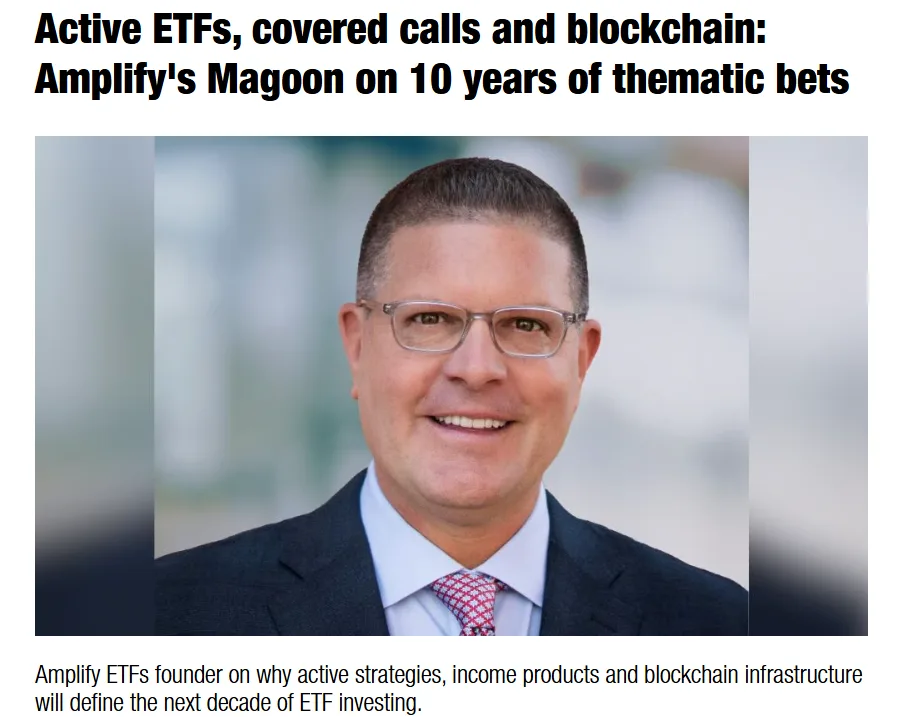
We had been working since the spring to connect Amplify ETFs CEO Christian Magoon with Steve Randall, who regularly covers the ETF industry for InvestmentNews. When Amplify approached its 10-year anniversary, our team saw a timely opportunity to reengage, using the milestone as a hook while broadening the conversation to ETF trends already relevant to Steve’s coverage. We tailored our outreach around those themes and secured a Q&A that gave Christian a platform to discuss Amplify’s growth, the evolution of the ETF market and where he sees the industry heading next. The feature turned a company milestone into a broader thought leadership opportunity while strengthening Christian’s relationship with a key ETF reporter.