


Each week we'll gather headlines and tips to keep you current with how generative AI affects PR and the world at large. If you have ideas on how to improve the newsletter, let us know!
What You Should Know
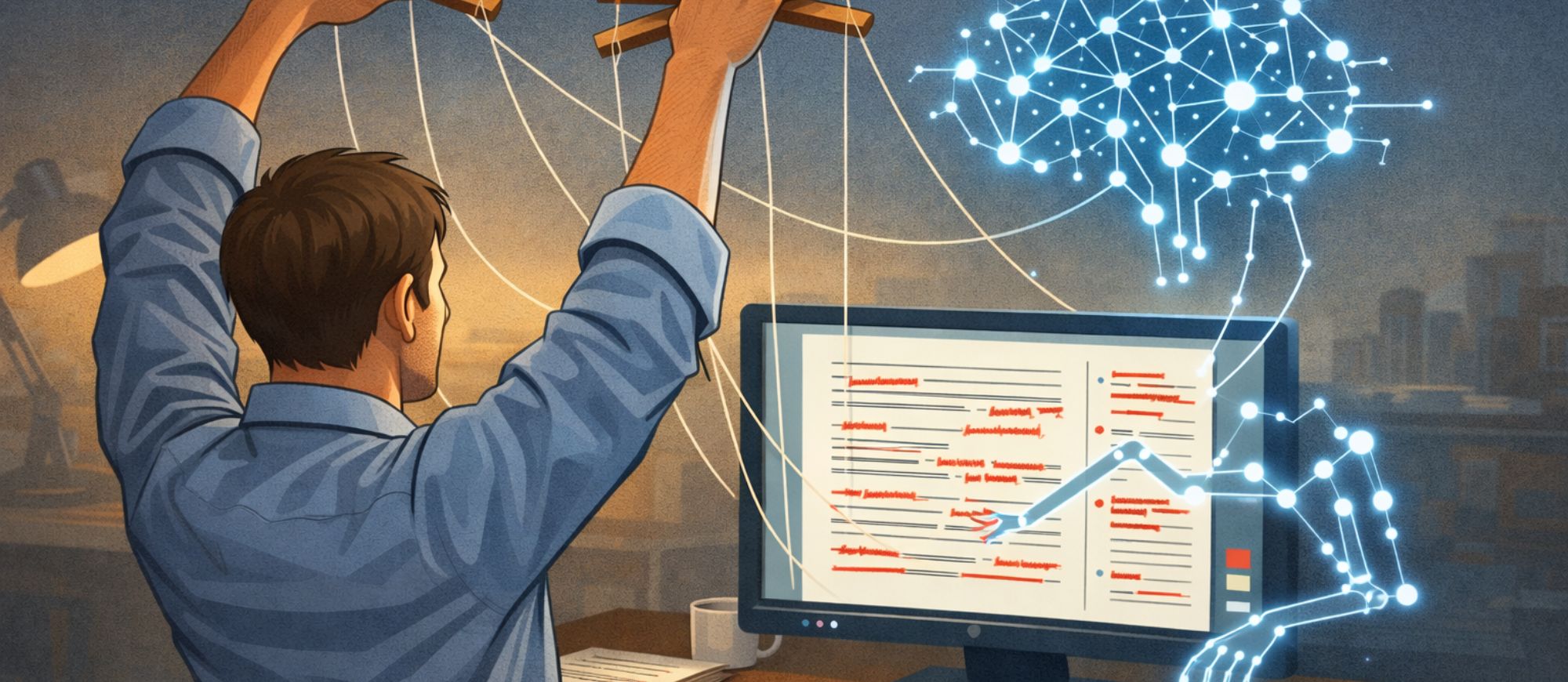
If AI Can Write, Can It Also Edit?
AI is finding its way into more parts of the writing process, and newsrooms are no exception. The Cleveland Plain Dealer recently started experimenting with AI that turns reporters’ notes into full draft stories. A human still reviews the work before publication.
The move has drawn criticism from some journalism observers who worry it could dilute the reporting process. Perhaps the Plain Dealer has it backwards. AI often serves better as an editing assistant than as a first-draft generator, especially given how protective journalists are of the writing process.
But editing with AI requires a more thoughtful approach than just pasting a paragraph into ChatGPT and saying, “edit this.” That’s where things go sideways.
To an AI model, “edit” just means “produce a different version.” It doesn’t know what your goal is. It doesn’t know what source material the draft came from. It doesn’t know whether the tone should match a client, a publication, or a specific expert. It just changes things. Rewrites with no clear intent.
That’s not editing.
Real editing involves a different set of questions. Is the information accurate? Does the argument flow logically? Are there repeated ideas or filler phrases? Does the tone match the intended audience? Does it follow the correct style guide? Those are the kinds of judgments editors make every day. AI can answer those questions well if you ask directly.
Instead of “edit this,” ask for feedback on whether the copy stays true to the source material, flows well, and whether there’s any repetition. The result is a detailed evaluation of your draft that offers something to think about and how to improve the copy. That keeps the writer in control. AI becomes a second set of eyes rather than an invisible coauthor making unexplained changes.
And as AI continues creeping into the writing process, that distinction is critical to writers owning their copy. Anyone can generate a draft in seconds with AI. The real skill — the one that still separates good communication from AI slop — is knowing what should stay on the page.
Elsewhere …
Tips and Tricks
 Who’s got the skills?
What’s happening: Between multiple model releases and acquisitions last week, OpenAI released a new feature in beta that didn’t even garner a tweet. You can now use ChatGPT to quickly reuse workflows through “skills” that you generate and can share with others.
Why you’d use them: If there’s a workflow you perform repeatedly, a skill could be a good way to automate that. Skills are similar to custom GPTs in that they follow a set of instructions you give, but they don’t have a different interface or “conversation starters.” OpenAI anticipates that skills will replace some custom GPTs after the beta period ends and user feedback is collected.
How to use them: You can recall and build skills by clicking your profile icon in ChatGPT, then selecting “Skills” from the menu. OpenAI Academy shares a few practical use cases, but for a PR pro, it might look something like this:
“Create a Skill called pr-brief-builder that turns messy client inputs (discovery call notes, email threads, bullet points, rough transcripts) into a one-page PR brief my team can paste into a doc. It should also generate 5–7 pitch angles and 3–5 spokesperson quote options. Keep it factual, avoid hype, and run basic AP-style checks.”
Consider the tasks you wish you could save time on, and see if ChatGPT can do them for you as a learned skill.
Quote of the Week
“The Institute has a unique vantage point: it has access to information that only the builders of frontier AI systems possess. It will use this to its full advantage, reporting candidly about what we’re learning about the shape of the technology we’re making. At the same time, the Institute is a two-way street. It will engage with workers and industries facing displacement, and with the people and communities who feel the future bearing down on them but are unsure how to respond. What we learn will inform what the Institute studies, and how our company as a whole chooses to act.”
— Anthropic, in a blog post about its new institute that will “confront the most significant challenges that powerful AI will pose to our societies.”
How Was This Newsletter?


