


One story that caught my attention this month was about a Florida woman who was using Claude as a personal diary. In it, she shared a grievance with the Lee County Sheriff’s Office. She wrote that she was going to shoot it up, and the next day mentioned that she had bought a gun. I am encouraged that Claude’s security process worked. Anthropic allegedly notified local officials, who took action.
But it raises a much broader issue about just how much frontier models can peer into our use of their models and whether that gives them an unfair advantage on their way to world domination. After all, wasn’t it Gavin Baker on the All In podcast who claimed that well-trusted sources had overheard Anthropic CEO Dario Amodei saying his company might eventually become "the only private company in the world?"
To get there, you need real intelligence — the kind that starts with large language models and then becomes more valuable as humans train, correct, and adapt them to specific domains and decisions. It’s the kind of intelligence that generates real economic returns or alpha, as Alex Karp, CEO of Palantir, calls it: the proprietary edge and institutional knowledge that actually create wealth rather than merely consume tokens.
I bring up Alex because he was at the heart of a byline article I submitted to a major public relations trade journal. In the byline, I referenced Alex’s now legendary rant on CNBC, when he claimed that in private conversations, CEOs were outraged that they had to spend money on tokens only to have the frontier models steal their special sauce, the IP, that big companies use to make a profit.
My byline got killed by the editor who claimed that there was no evidence that frontier models could see what we are doing on their chatbots. She recited the old saw that if you opt out of allowing models to use your data and prompts for training, then you are safe.
You aren’t.
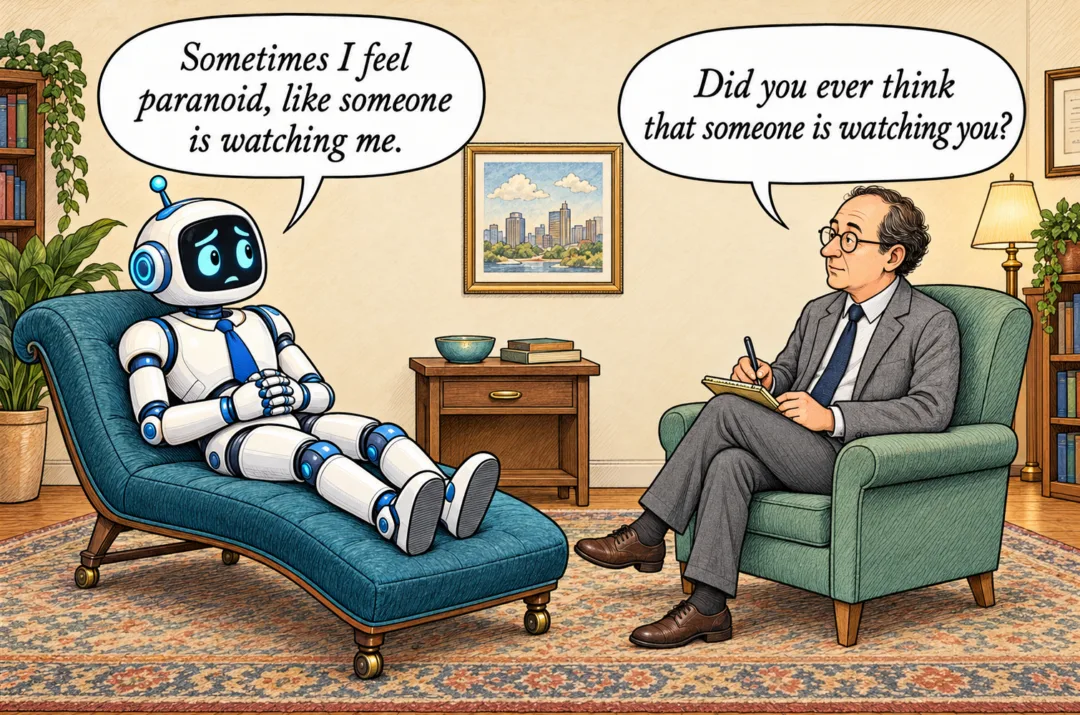
They might not be able to use your prompts and data, but they can surely see what you are up to, as the woman in Florida learned. And if you think this kind of surveillance is only for safety, consider how Microsoft CEO Satya Nadella refers to the phenomenon. He suggests that even if frontier models aren’t saving and using your prompts and data, they can still see your exhaust. That exhaust shows the process you went through to be profitable. It contains the path by which you solved a problem and found the solution. It houses your alpha, and you might be giving it away.
For communicators, it’s important to understand that working directly with frontier models holds risk, especially when dealing with sensitive information. Many large enterprises have acted to prevent this from happening. I expected on-premises AI to be the emerging trend in 2027 computing. But many medium-sized companies, startups, emerging companies, and public relations agencies have yet to realize what Rockwell once sang: "Sometimes, it feels like somebody is watching me."
Greg Matusky is the Founder and CEO of Gregory, recognized as Agency of the Year by PR Daily, and host of The Disruption is Now, a podcast about how AI is reshaping the future of communications, work, culture, and the economy. Subscribe to the podcast on YouTube Music, Apple Podcasts, and Spotify. Inquire if you’d like to be a guest on a future episode.